
Understanding the difference between taking occupancy and closing on a pre-construction condo is crucial for buyers. Learn how interim occupancy works, what fees to expect, and what happens at final closing. Prepare financially, avoid surprises, and make informed decisions about your purchase. Read
When purchasing a pre-construction condo, the journey from signing the contract to officially owning the unit is unique compared to a traditional resale purchase. One of the biggest differences buyers need to understand is the distinction between taking occupancy and closing. These two phases play a crucial role in the overall process, and understanding what they entail can help you plan financially and logistically.
What Is Occupancy?
Occupancy occurs when a buyer takes possession of their pre-construction condo before officially owning it. This period is commonly referred to as "interim occupancy," and it happens because developers register a condo corporation only once all units are completed and the building is finished. Since not all units are completed at the same time, some buyers move in earlier than others. Typically lower floor units move in first and higher floor units move in later.
During this phase, you do not yet own the condo unit, but you are allowed to live in it or rent it out (depending on your agreement with the developer).
What Are Occupancy Fees?
One of the most significant financial aspects of occupancy is the occupancy fee, sometimes referred to as "phantom rent”. However do not misinterpret this for “paying rent”. This fee is paid to the developer during the occupancy period and is calculated based on three components:
Interest on the unpaid balance of your purchase price – This is calculated based on the Bank of Canada’s rate and/or the builder’s rate.
Estimated property taxes – The developer estimates what your share of the property taxes will be.
Maintenance fees – Since the condo is technically occupied, maintenance fees start being charged.
It's important to note that these payments do not go towards your mortgage or equity in the property, they simply cover the developer’s costs until the official closing. Many times your occupancy fee amount can be similar to what your monthly mortgage payment would be.
How Long Does the Occupancy Period Last?
The length of the occupancy period can vary. For lower floors, it can be several months, while for upper floors, it may be shorter. In some cases, if construction delays occur or there are hold-ups in registering the condo corporation, occupancy can last close to a year. Buyers should be financially prepared for this period, as they will be paying occupancy fees while also potentially paying rent elsewhere or covering their existing mortgage if they own another property.
What Happens at Closing?
Final closing is when the ownership of the unit is officially transferred from the developer to the buyer. This means your mortgage is activated, and you will officially hold title to the property. At this stage, several things happen:
Legal Ownership Transfer – The condo is officially registered with the city, and buyers receive their title deed.
Mortgage Comes Into Effect – Your lender funds the mortgage, and you begin making mortgage payments.
Land Transfer Tax Is Paid – In Toronto, this means paying both municipal and provincial land transfer taxes.
Final Adjustments Are Settled – This includes final occupancy fees, property tax adjustments, and any remaining closing costs.
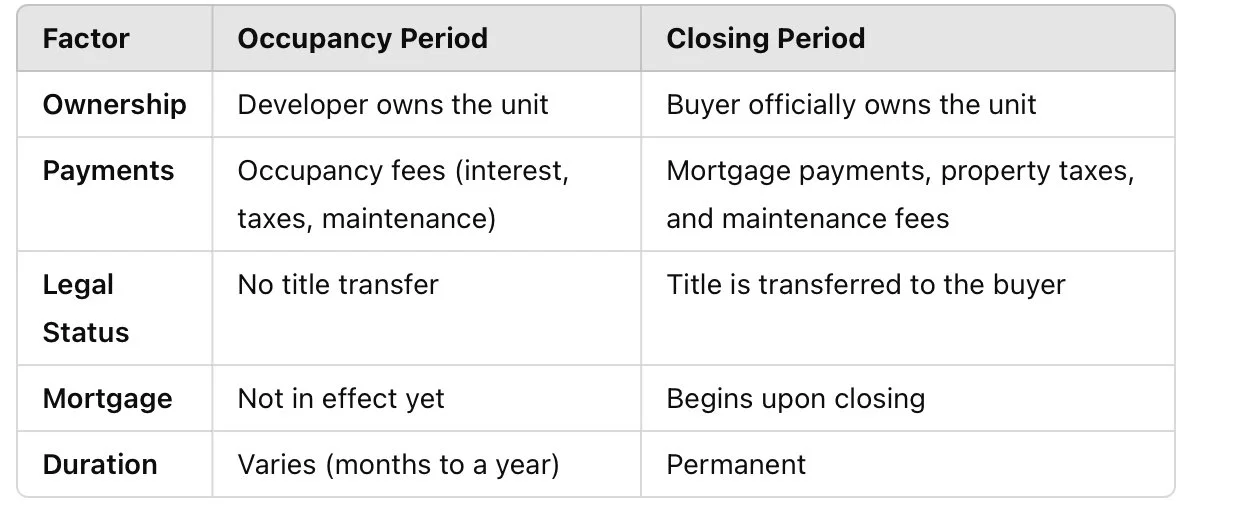
Key Differences Between Occupancy and Closing
How to Prepare for Each Phase
Financial Preparation
For Occupancy: Budget for occupancy fees, which are extra costs that do not contribute to equity.
For Closing: Ensure your mortgage approval is in place and set aside funds for land transfer tax, legal fees, and other closing costs.
Legal Considerations
During Occupancy: Understand your rights in the occupancy period, particularly if you plan to rent out the unit.
During Closing: Work with a real estate lawyer to ensure all documents are in order and to facilitate a smooth transfer of ownership.
Managing Expectations
Occupancy Delays: Be prepared for potential delays in full building completion and condo registration.
Final Closing Costs: Have a clear understanding of all closing-related expenses beyond just the mortgage.
Final Thoughts
Understanding the distinction between occupancy and closing is essential for buyers navigating the preconstruction condo process. While occupancy allows early access to the unit, it comes with added financial responsibilities that do not build equity. Closing, on the other hand, marks the true milestone of ownership but requires careful financial preparation.
By planning ahead and working with the right professionals—including a realtor, mortgage specialist, and lawyer—you can make this transition smoother and set yourself up for success in your preconstruction condo investment.
Have questions?
Want to know more about Taking Occupancy vs Closing (What's the Difference and How Does It Affect You?)? Send me a message and I'll get back to you within 24 hours.